AGROVISIÓN – Sábado 24 de Marzo

Plenitud de Puerto Rico – Iniciativas Ecoeducativas

Plenitud Iniciativas

Demostrando y proveyendo conocimientos para una vida sustentable y armoniosa.

Ubiquitous Energy: A Solar Game-Changer?

Ubiquitous Energy

We need this!

Download solar radiation data for the Northern Caribbean

Impacts of Land Cover/Land Use Changes in Coastal Tropical Regions under a Changing Environment in Northeast Puerto Rico

Coastal Urban Environmental Research Group (CUERG)
CUERG is a part of the NOAA-Cooperative Remote Sensing Science and Technology Center (NOAA-CREST) at the City College of New York.
CUERG has studied Impacts of Land Cover/Land Use Changes in Coastal Tropical Regions under a Changing Environment in northeast Puerto Rico
Research papers from the group can be found here.

Some Pictures from my Soil and Water Managment Course – 2nd Semester 2011/2012

Some Pictures from my Soil and Water Managment Course – 2nd Semester 2011/2012 – CLICK HERE

LA UPR VENDERÁ TERRENOS EN GURABO Piden 10 cuerdas para construir una escuela pública

23 de febrero de 2012

LA UPR VENDERÁ TERRENOS EN GURABO
Piden 10 cuerdas para construir una escuela pública
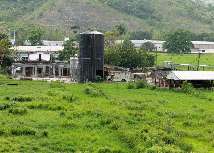
El presidente de la UPR no quiso especular sobre la cantidad de dinero que recibirán por los terrenos en Gurabo. (Archivo / Ángel M. Rivera)
Por Cynthia López Cabán / End.cynthia.lopez@elnuevodia.com
La Universidad de Puerto Rico (UPR) avaló la construcción de una escuela pública en los terrenos de la Estación Experimental que la institución mantiene en Gurabo, los mismos que el año pasado fueron eje de una controversia con la administración municipal.
Como parte de la transacción, la UPR planea vender 10 cuerdas de terreno para desarrollar un plantel del proyecto de Escuelas para el Siglo 21, que impulsa el gobernador Luis Fortuño.
En entrevista con El Nuevo Día, el presidente de la UPR, Miguel Muñoz, explicó que recibió una petición de compra de terreno de la Autoridad para el Financiamiento de Infraestructura (AFI) y la Autoridad de Edificios Públicos.
“Eso es una iniciativa que siempre he apoyado. Especialmente una escuela modelo que va acorde con la misión de la Universidad”, afirmó Muñoz.
El año pasado, el alcalde de Gurabo, Víctor Ortiz, impulsó sin éxito una medida para que la Legislatura obligara a la UPR a permutar 100 cuerdas de alto valor agrícola y de investigación de la Estación Experimental de Gurabo por unas 62.7 cuerdas de terrenos, mayormente inundables.
Ortiz impulsaba la permuta para construir en el lugar una escuela, un residencial público, un hospital, un colegio de enfermería y un proyecto de viviendas de interés social.
Este canje forzoso recibió el rechazo de la comunidad universitaria porque usurpaba facultades de la institución y la despojaba de terrenos de alto valor agrícola y de investigación. Pero durante el debate que generó la polémica, Muñoz expresó en varias ocasiones que favorecía una propuesta para la construcción de una escuela modelo.
Pese a que Fortuño rechazó la permuta, favoreció que la UPR cediera terrenos de la Estación Experimental para la construcción de una escuela y un hospital.
Ayer, Muñoz reiteró que la UPR podría apadrinar la escuela con personal y recursos técnicos.
Permiso de los síndicos
Muñoz detalló, a preguntas de este diario, que la semana pasada pidió autorización a la Junta de Síndicos para que AFI entre a la Estación Experimental a realizar los estudios del suelo necesarios para la construcción.
Las tierras que serán evaluadas próximamente colindan con la carretera 189 y forman parte de los terrenos que codiciaba el alcalde de Gurabo.
Sin embargo, Muñoz no pudo garantizar que no se verá afectada la finca de cosecha orgánica de la Estación Experimental, una de las pocas que existen en la Isla con certificación del Departamento federal de Agricultura.
“En este momento no te lo puedo asegurar”, respondió.
“El proyecto (de la finca orgánica) podría establecerse en otra parte, de ser necesario”, agregó.
Señaló también que la venta se realizará al precio de tasación e insistió que esta transacción tendrá “el menor impacto posible en las actividades de investigación”.
No especuló sobre los ingresos que generaría la UPR con esta venta.
“El terreno allí tiene mucho valor”, indicó Muñoz.


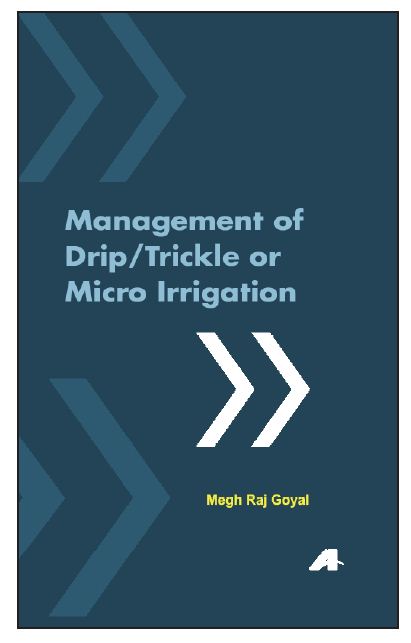
New Book Announcement: Management of Drip/Trickle or Micro Irrigation – Forthcoming Spring 2012

Management of Drip/Trickle or Micro Irrigation
By Megh R. Goyal, PhD, Professor in Agricultural and Biomedical Engineering, University of Puerto Rico

http://www.appleacademicpress.com

This important book—the only complete, one-stop manual on microirrigation worldwide—offers knowledge and techniques necessary to develop and manage a drip/trickle or micro irrigation system. The simplicity of the contents facilitates a technician to develop an effective micro irrigation system. Management of Drip/Trickle or Micro Irrigation includes the basic considerations relating to soil-water-plant interactions, with topics such as methods for soil moisture measurement; evapotranspiration; irrigation systems; tensiometer use and installation; principles of drip/ micro/trickle irrigation; filtration systems; automation; chloration; service and maintenance; design of drip irrigation and lateral lines; the evaluation of uniformity of application; and an economical analysis for selecting irrigation technology.

On Reading Old Things

On Reading Old Things is a great article by Jacquelyn Gill. All graduate students should read this article. At the beginning of this semester I assigned a reading by Gautier et al.(1980) and remember feeling a little embarrassed that the article, which is about satellite technology, was so old. Despite its age, however, the article is excellent and forms the basis of the satellite technology which we use to obtain the current hourly and daily solar radiation in the northern Caribbean. I could list other examples of old articles that are foundational and which should be read by anybody working in those fields. Gill mentions, and I have personally observed, that some journal reviewers sometime pressure authors to use recently published references and discourage older ones. Another practice that I have observed is that a journal will require that at least three references in the paper be from their journal. The reason for this of course is to jack up the rating of their journal, since they are rated on the number of times that their articles are cited. Anyhow, I highly recommend that you read On Reading Old Things.

From Gautier, C., G. R. Diak, and S. Masse, 1980: A simple physical model to estimate incident solar radiation at the surface from GOES satellite data. J. Appl. Meteor., 19, 1007–1012.

CROP WATER USE ( HARGREAVES ET EQUATION) WOLFRAM ALPHA WIDGET

CROP WATER USE ( HARGREAVES ET EQUATION) NEW WOLFRAM ALPHA WIDGET. Reference: Hargreaves, G. H. and Z. A. Samani, Reference Crop Evapotranspiration from Temperature. Appl. Eng. Agric., ASAE. 1(2). 1985,. pp.96-99.

Widget Application: Suppose you want to schedule irrigation by replacing the water evapotranspired by your crop each day.  1. Click on the appropriate link to get yesterdays solar radiation for your location: Puerto Rico or Northern Caribbean, 2. Check the internet for the average daily air temperature at your location (average = (minimum + maximum)/2),  3. Get the appropriate crop coefficient for your crop from this link, and 4. Finally, enter solar radiation, air temperature and crop coefficient into the widget to estimate ET. Multiply ET x acres x 1069.0663 to get the number of gallons of water you need to apply to your field.

MIT researcher discovers way to make solar panels from plants

MIT researcher discovers way to make solar panels from plants