WEB-BASED IRRIGATION SCHEDULING TOOL FOR PUERTO RICO

Map_attribution

There are various approaches for scheduling irrigation.  One approach is to supplement rainfall with enough irrigation so that the cumulative rainfall and irrigation, over a specific period of time (e.g., one day, one week, one season),  matches the estimated crop water requirement.

The information on this page will allow you to schedule your irrigation in this manner. Here is how it works:

1. First, and this is the hardest part, create an evapotranspiration crop coefficient (Kc) curve for your crop.  The following link to the Food and Agriculture Organization (FAO) Document No. 56 provides guidance on the construction of a Kc curve: CLICK HERE.  Your Kc curve should look like FAO 56 Figure no. 34 when you are finished. (FYI: Crop coeffiecient curves can also be created using the PRET computer program)

2. Now it gets easier.  Go to the appropriate reference evapotranspion (ETo) map(s) for Puerto Rico and determine the ETo for your location CLICK HERE.  Note, if you are irrigating ever day, then you only need to obtain the ETo for yesterday’s date.  If, however, you are irrigating once per week, for example, then you will need to get the ETo values from the maps for the previous week. In this latter example, you will need to sum the daily values of ETo to obtain a value of the weekly ETo.

3. From your Kc curve, determine a representative value of Kc for the time period of your analysis (e.g., daily or weekly).

4. Estimate the crop water requirement (crop evapotranspiration)  ETc = Kc x ETo.

5. Estimatate the required depth of irrigation:  Irrigation = ET – Rainfall.  If the estimated Irrigation is negative, then you do not need to irrigate.

It is recommended that you measure the rainfall on your farm with a rain gauge, however, if you do not have access to the measured rainfall, you can obtain an estimate of the rainfall (derived from NEXRAD radar) by clicking here.

The irrigation scheduling approach described above is based on various simplifying assumptions (e.g., surface runoff and deep percolation are ignored).  Nevertheless, it will vastly improve your water management if you are not currently using an irrigation scheduling method.    To evaluate your irrigation management, you may want to construct a graph similar to the example provided below.  The graph shows the cumalative depth of  irrigation and ETc plotted with time.  If these two curves stay close together then you are doing a pretty good job of managing your irrigation.

Example of the cumulative irrigation and ET plotted with time for a crop season. The goal of irrigation scheduling is to try to match the applied irrigation with the ET. By the end of the season, the cumulative irrigation should more or less equal the cumulative ET.

The methods used to obtain ETo and rainfall can be obtained at the following website: GOES-Puerto Rico Water and Energy Balance (GOES-WEB) Algorithm

For another method of irrigation scheduling that takes into account soil moisture, see A simple Irrigation Scheduling Spreadsheet Program

DISCLAIMER: The information is provided “as is”. The authors and publishers of this information disclaim any loss or liability, either directly or indirectly as a consequence of applying the information provided herein, or in regard to the use and application of said information. No guarantee is given, either expressed or implied, in regard to the accuracy, or acceptability of the information.

GOES-PUERTO RICO WATER AND ENERGY BALANCE (GOES-PRWEB) IS NOW OPERATIONAL

GOES-PRWEB is finally operational.  I would like to thank my student, Victor Reventos, who made it possible through his Python programming skills.  Here is a link to the results:

http://academic.uprm.edu/hdc/GOES-PRWEB_RESULTS/

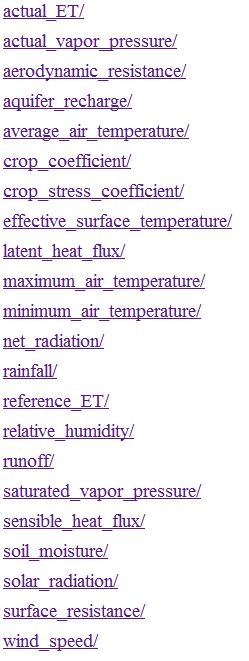
New results will be published daily.  Historical results are available from January 1, 2010. A list of the available output is provided below.

For information on GOES-PRWEB please visit the following link:

https://pragwater.com/goes-puerto-rico-water-and-energy-balance-goes-web-algorithm/

Eric Harmsen

GOES-PRWEB RESULTS


NON-TRANSIENT PARAMETERS


ACKNOWLEDGEMENTS: This research received partial funding from the following sources: NOAA-CREST (grant NA06OAR4810162) and USDA Hatch Project (Hatch-402). Special thanks to Dr. John Mecikalski for providing the solar radiation data, and Alejandra Rojas for providing various GIS maps used in this research.

DISCLAIMER: The information is provided “as is”. The authors and publishers of this information disclaim any loss or liability, either directly or indirectly as a consequence of applying the information provided herein, or in regard to the use and application of said information. No guarantee is given, either expressed or implied, in regard to the accuracy, or acceptability of the information.

GOES-PRWEB TO BECOME OPERATIONAL

Dear Friends

Total estimated actual evapotranspiration for 2010 derived from the GOES-PRWEB algorithm.

I am sending out this “heads up” to let you know that within the next few days the GOES-Puerto Rico Water and Energy Balance (PRWEB) model will become operational.   “Operational” means that the results will appear on the website everyday.  The water and energy balance results, and all other environmental parameters will be published in “near real-time” (i.e., through yesterday’s date).   In other words, if you visit the website on April 2, 2012, for example, the results will be current up through April 1, 2012.  In addition, graphic results will be provided on a daily basis starting from January 1, 2010.

As always, feel free to respond to my posts with questions or comments.

Eric

Can we solve global water scarcity?

Can we solve global water scarcity?
This is a great article!

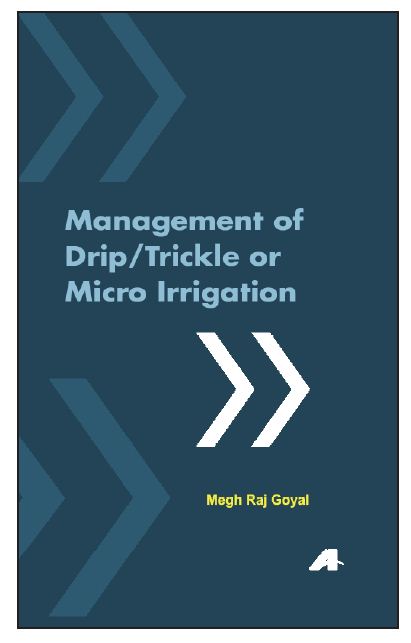
New Book Announcement: Management of Drip/Trickle or Micro Irrigation – Forthcoming Spring 2012

Management of Drip/Trickle or Micro Irrigation
By Megh R. Goyal, PhD, Professor in Agricultural and Biomedical Engineering, University of Puerto Rico

http://www.appleacademicpress.com

This important book—the only complete, one-stop manual on microirrigation worldwide—offers knowledge and techniques necessary to develop and manage a drip/trickle or micro irrigation system. The simplicity of the contents facilitates a technician to develop an effective micro irrigation system. Management of Drip/Trickle or Micro Irrigation includes the basic considerations relating to soil-water-plant interactions, with topics such as methods for soil moisture measurement; evapotranspiration; irrigation systems; tensiometer use and installation; principles of drip/ micro/trickle irrigation; filtration systems; automation; chloration; service and maintenance; design of drip irrigation and lateral lines; the evaluation of uniformity of application; and an economical analysis for selecting irrigation technology.

Rescued Meteorological Data for the Caribbean Region – Excellent Historical Resource

Rescued Meteorological Data for the Caribbean Region – Excellent Historical Resource
These data are stored in NOAA’s digital library under the heading: Data Rescue Caribbean. Many of the recorded measurements are from the first half of the 20th Century.

For other interesting historical NOAA documents, check out the following link: http://docs.lib.noaa.gov/rescue/

pragwater.com is not just for Puerto Rico

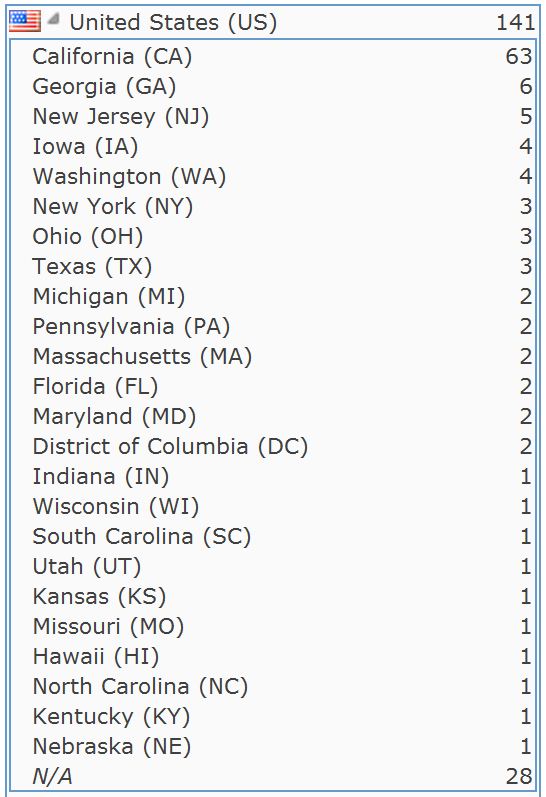
Two weeks ago, pragwater.com started using a free online service called ClusterMaps. We were happy to learn that pragwater.com has received visits from people all over the world, 27 countries in all. Here is the breakdown:


Estudio Sobre El Uso De Agua Agrícola En Puerto Rico

Estudio Sobre El Uso De Agua Agrícola En Puerto Rico

This report provides agricultural water requirements for Puerto Rico through 2025.

A simple Irrigation Scheduling Spreadsheet Program

A simple spreadsheet for scheduling irrigation can be downloaded by CLICKING HERE.
(Spreadsheet updated Nov 28, 2018)

The methodology used in the spreadsheet is presented in Crop evapotranspiration – Guidelines for computing crop water requirements – FAO Irrigation and drainage paper 56, Chapter 8

To use the spreadsheet, you need to enter input wherever the cells are yellow. Here are some basic instructions:
Setting up the Spreadsheet
1. In the first Worksheet Tab (Soil Moisture Worksheet), enter the date of the first day of the crop season.
2. Enter soil field capacity and wilting point in percent. If you know the soil texture you can get the field capacity and wilting point online by clicking here.
3. Enter rooting depth for each day of the season. Maximum rooting depths for various crops are given in FAO 56 Table 22.
4. Management Allowed Deficit (MAD) is given in FAO 56 Table 22, however, the FAO refers to it as the Depletion Fraction (P). P and MAD are the same thing.
5. Enter soil volumetric moisture content as a percent on the first day of the season.
6. Enter the evapotranspiration (ETc) each day. Many meteorologic stations will provide estimates of daily reference evapotranspiration (ETo). You will need to multiply the ETo by the appropriate crop coefficient (Kc) for your crop to obtain the actual evapotranspiration (ETc).
7. Enter the rainfall or irrigation each day.
8. In the next Worksheet Tab (Application Rate), enter the date of the first day of the crop season.
9. Enter the area of the field in acres.
10. Enter the percent wetted area. If drip irrigation is used, only a portion of the field may become wet.
11. Enter the percent efficiency of the irrigation system.
12. Enter the pump flow rate in gallons per minute.

Using the Spreadsheet to Schedule Irrigation
The objective of the analysis is to minimize crop stress as indicated by the crop stress factor (Ks). If this parameter is less than 1, then the crop is in a state of water stress. To simplify the analysis the spreadsheet provides the column “Did Stress Occur?” When stress occurs, as indicated by “Yes”, then you should irrigate your crop. To see how much you should irrigate, see the column called “Irrigation Needed”. Enter the amount you want to irrigate in the column called “Applied Irrigation or Rainfall”. Finally, go to the Application Rate Worksheet Tab to see how many hours you should run your irrigation system to put on the desired amount of water.

Soil Moisture Graph Worksheet Tab. Any time that this graph falls below the green line (Threshold Moisture Content) the crop is in stress. Throughout the crop season the graph should never fall below this line if possible. It is also very important that the soil moisture not exceed the field capacity because this water will be wasted, either through deep percolation or surface runoff.

ETcadj Worksheet Tab. The evapotranspiration is shown in this worksheet. ETcadj is the crop ET multiplied by the crop stress factor, and represents the real ET.

Crop Stress Factor Worksheet Tab. This graphs shows the crop stress factor as a function of time throughout the crop season. This line should be as close as possible to 1 throughout the season. Any value lower than 1 indicates that stress occurred. NOTE ALSO!! In this worksheet a value of the relative seasonal crop yield is provided. The yield response factor (Ky) required to calculate the relative yield can be obtained from Table 24 of the FAO 56 document for various crops.

Cumulative ET vs Irrigation Worksheet Tab. The purpose of this graph is to show how close your applied irrigation was to the ET. Throughout the season and at the end of the season, the value of the cumulative irrigation should be as close as possible to the cumulative ET. (Note in this graph that the ET used is the ETc and not the ETcadj).

DISCLAIMER: The information on this website is provided “as is”. The authors and publishers of this information disclaim any loss or liability, either directly or indirectly as a consequence of applying the information provided herein, or in regard to the use and application of said information. No guarantee is given, either expressed or implied, in regard to the accuracy, or acceptability of the information.

Excellent Online Resource for Hydraulic/Hydrologic Calculations

VLab: An excellent free Online Resource for Hydraulics/Hydrologic Calculations: http://onlinecalc.sdsu.edu/. Thank you to Dr. Victor Miguel Ponce for your contribution to an Open Source web!