RENEWABLE ENERGY IN PUERTO RICO

Renewable Energy in Puerto Rico – Presentation to PR Senate

Achievable Renewable Energy Targets For Puerto Rico’s Renewable Energy Portfolio  Standard – Final Report

By Agustín A. Irizarry-Rivera, Ph.D., P.E.
Department of Electrical and Computer Engineering
agustin@ece.uprm.edu
José A. Colucci-Ríos, Ph.D., P.E.
Department of Chemical Engineering
biodieselpr1@aol.com
Efraín O’Neill-Carrillo, Ph.D., P.E.
Department of Electrical and Computer Engineering
oneill@ece.uprm.edu

Denmark Passes Legislation: 100% Renewable Energy by 2050!

Denmark Passes Legislation: 100% Renewable Energy by 2050!
from sustainablebusiness.com

Monthly Average Solar Radiation Images Available for Puerto Rico

Monthly average solar radiation images for Puerto Rico can be downloaded at the following link:
http://academic.uprm.edu/hdc/GOES-PRWEB_MONTHLY_RESULTS/solar_radiation/

The images includes 26 months of data starting in January 2010.  Other atmospheric/hydrologic data images are also available at the following link:

https://pragwater.com/goes-puerto-rico-water-and-energy-balance-goes-web-algorithm/

GOES-PUERTO RICO WATER AND ENERGY BALANCE (GOES-PRWEB) IS NOW OPERATIONAL

GOES-PRWEB is finally operational.  I would like to thank my student, Victor Reventos, who made it possible through his Python programming skills.  Here is a link to the results:

http://academic.uprm.edu/hdc/GOES-PRWEB_RESULTS/

New results will be published daily.  Historical results are available from January 1, 2010. A list of the available output is provided below.

For information on GOES-PRWEB please visit the following link:

https://pragwater.com/goes-puerto-rico-water-and-energy-balance-goes-web-algorithm/

Eric Harmsen

GOES-PRWEB RESULTS
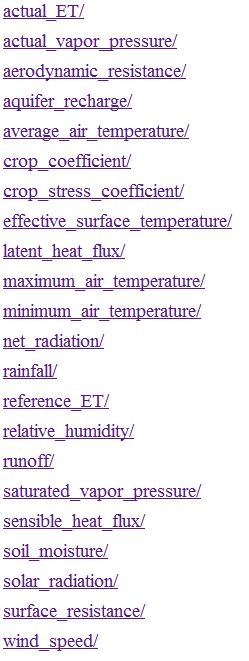

NON-TRANSIENT PARAMETERS


ACKNOWLEDGEMENTS: This research received partial funding from the following sources: NOAA-CREST (grant NA06OAR4810162) and USDA Hatch Project (Hatch-402). Special thanks to Dr. John Mecikalski for providing the solar radiation data, and Alejandra Rojas for providing various GIS maps used in this research.

DISCLAIMER: The information is provided “as is”. The authors and publishers of this information disclaim any loss or liability, either directly or indirectly as a consequence of applying the information provided herein, or in regard to the use and application of said information. No guarantee is given, either expressed or implied, in regard to the accuracy, or acceptability of the information.

Ubiquitous Energy: A Solar Game-Changer?

Ubiquitous Energy

We need this!

Download solar radiation data for the Northern Caribbean

Solar projects continue in rural Haiti

Solar projects continue in rural Haiti

Pragwater.com is proud to support the design of solar radiation projects in Haiti.

CLICK HERE to download hourly or daily integrated solar radiation data for Haiti.

Harnessing nature’s solar cells

MIT researcher Andreas Mershin has a vision that within a few years, people in remote villages in the developing world may be able to make their own solar panels, at low cost, using otherwise worthless agricultural waste as their raw material.

New Book Announcement: Management of Drip/Trickle or Micro Irrigation – Forthcoming Spring 2012

Management of Drip/Trickle or Micro Irrigation
By Megh R. Goyal, PhD, Professor in Agricultural and Biomedical Engineering, University of Puerto Rico

http://www.appleacademicpress.com

This important book—the only complete, one-stop manual on microirrigation worldwide—offers knowledge and techniques necessary to develop and manage a drip/trickle or micro irrigation system. The simplicity of the contents facilitates a technician to develop an effective micro irrigation system. Management of Drip/Trickle or Micro Irrigation includes the basic considerations relating to soil-water-plant interactions, with topics such as methods for soil moisture measurement; evapotranspiration; irrigation systems; tensiometer use and installation; principles of drip/ micro/trickle irrigation; filtration systems; automation; chloration; service and maintenance; design of drip irrigation and lateral lines; the evaluation of uniformity of application; and an economical analysis for selecting irrigation technology.

NASA: Human Activity, Not Solar Activity, Drives Global Warming and Returning to 350 ppm Is Needed to Stop It

NASA: Human Activity, Not Solar Activity, Drives Global Warming and Returning to 350 ppm Is Needed to Stop It

See also: http://www.giss.nasa.gov/research/briefs/hansen_16/

MIT researcher discovers way to make solar panels from plants

MIT researcher discovers way to make solar panels from plants