Monthly Average Solar Radiation Images Available for Puerto Rico

Monthly average solar radiation images for Puerto Rico can be downloaded at the following link:
http://academic.uprm.edu/hdc/GOES-PRWEB_MONTHLY_RESULTS/solar_radiation/

The images includes 26 months of data starting in January 2010.  Other atmospheric/hydrologic data images are also available at the following link:

https://pragwater.com/goes-puerto-rico-water-and-energy-balance-goes-web-algorithm/

WEB-BASED IRRIGATION SCHEDULING TOOL FOR PUERTO RICO

Map_attribution

There are various approaches for scheduling irrigation.  One approach is to supplement rainfall with enough irrigation so that the cumulative rainfall and irrigation, over a specific period of time (e.g., one day, one week, one season),  matches the estimated crop water requirement.

The information on this page will allow you to schedule your irrigation in this manner. Here is how it works:

1. First, and this is the hardest part, create an evapotranspiration crop coefficient (Kc) curve for your crop.  The following link to the Food and Agriculture Organization (FAO) Document No. 56 provides guidance on the construction of a Kc curve: CLICK HERE.  Your Kc curve should look like FAO 56 Figure no. 34 when you are finished. (FYI: Crop coeffiecient curves can also be created using the PRET computer program)

2. Now it gets easier.  Go to the appropriate reference evapotranspion (ETo) map(s) for Puerto Rico and determine the ETo for your location CLICK HERE.  Note, if you are irrigating ever day, then you only need to obtain the ETo for yesterday’s date.  If, however, you are irrigating once per week, for example, then you will need to get the ETo values from the maps for the previous week. In this latter example, you will need to sum the daily values of ETo to obtain a value of the weekly ETo.

3. From your Kc curve, determine a representative value of Kc for the time period of your analysis (e.g., daily or weekly).

4. Estimate the crop water requirement (crop evapotranspiration)  ETc = Kc x ETo.

5. Estimatate the required depth of irrigation:  Irrigation = ET – Rainfall.  If the estimated Irrigation is negative, then you do not need to irrigate.

It is recommended that you measure the rainfall on your farm with a rain gauge, however, if you do not have access to the measured rainfall, you can obtain an estimate of the rainfall (derived from NEXRAD radar) by clicking here.

The irrigation scheduling approach described above is based on various simplifying assumptions (e.g., surface runoff and deep percolation are ignored).  Nevertheless, it will vastly improve your water management if you are not currently using an irrigation scheduling method.    To evaluate your irrigation management, you may want to construct a graph similar to the example provided below.  The graph shows the cumalative depth of  irrigation and ETc plotted with time.  If these two curves stay close together then you are doing a pretty good job of managing your irrigation.

Example of the cumulative irrigation and ET plotted with time for a crop season. The goal of irrigation scheduling is to try to match the applied irrigation with the ET. By the end of the season, the cumulative irrigation should more or less equal the cumulative ET.

The methods used to obtain ETo and rainfall can be obtained at the following website: GOES-Puerto Rico Water and Energy Balance (GOES-WEB) Algorithm

For another method of irrigation scheduling that takes into account soil moisture, see A simple Irrigation Scheduling Spreadsheet Program

DISCLAIMER: The information is provided “as is”. The authors and publishers of this information disclaim any loss or liability, either directly or indirectly as a consequence of applying the information provided herein, or in regard to the use and application of said information. No guarantee is given, either expressed or implied, in regard to the accuracy, or acceptability of the information.

GOES-PUERTO RICO WATER AND ENERGY BALANCE (GOES-PRWEB) IS NOW OPERATIONAL

GOES-PRWEB is finally operational.  I would like to thank my student, Victor Reventos, who made it possible through his Python programming skills.  Here is a link to the results:

http://academic.uprm.edu/hdc/GOES-PRWEB_RESULTS/

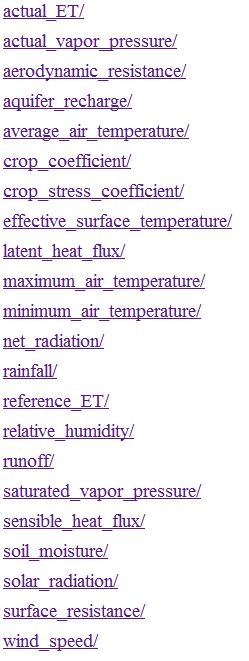
New results will be published daily.  Historical results are available from January 1, 2010. A list of the available output is provided below.

For information on GOES-PRWEB please visit the following link:

https://pragwater.com/goes-puerto-rico-water-and-energy-balance-goes-web-algorithm/

Eric Harmsen

GOES-PRWEB RESULTS


NON-TRANSIENT PARAMETERS


ACKNOWLEDGEMENTS: This research received partial funding from the following sources: NOAA-CREST (grant NA06OAR4810162) and USDA Hatch Project (Hatch-402). Special thanks to Dr. John Mecikalski for providing the solar radiation data, and Alejandra Rojas for providing various GIS maps used in this research.

DISCLAIMER: The information is provided “as is”. The authors and publishers of this information disclaim any loss or liability, either directly or indirectly as a consequence of applying the information provided herein, or in regard to the use and application of said information. No guarantee is given, either expressed or implied, in regard to the accuracy, or acceptability of the information.

Solar projects continue in rural Haiti

Solar projects continue in rural Haiti

Pragwater.com is proud to support the design of solar radiation projects in Haiti.

CLICK HERE to download hourly or daily integrated solar radiation data for Haiti.

New Satellite Takes Spectacular High-Res Image of Earth

New Satellite Takes Spectacular High-Res Image of Earth

You can download the full image in extremely high resolution (8,000 x 8,000 pixels!).

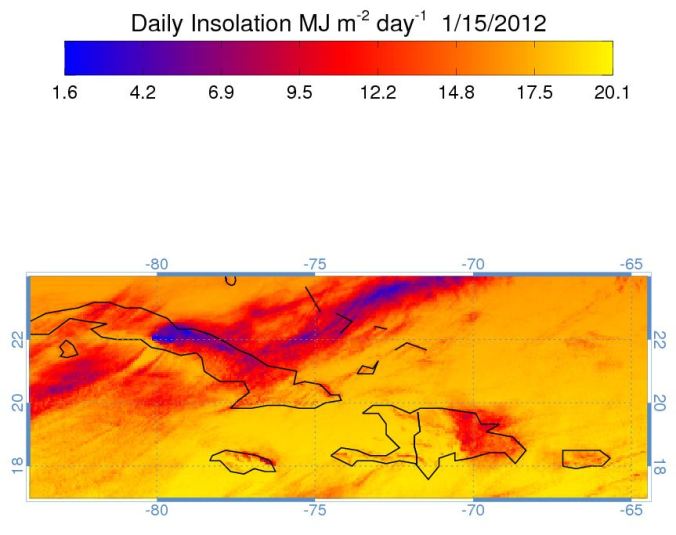
Yesterday’s Solar Radiation in the Northern Caribbean

Download Hourly and daily solar radiation data for the northern Caribbean here

pragwater.com is not just for Puerto Rico

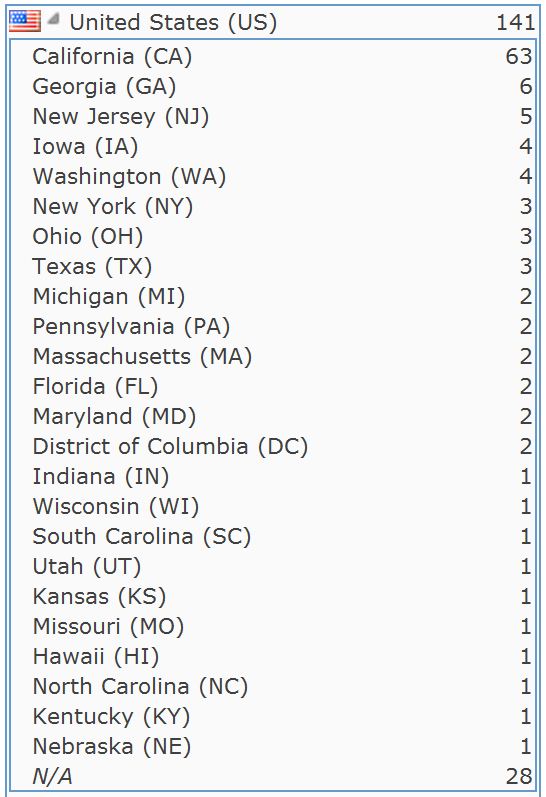
Two weeks ago, pragwater.com started using a free online service called ClusterMaps. We were happy to learn that pragwater.com has received visits from people all over the world, 27 countries in all. Here is the breakdown:


What are People doing with the Northern Caribbean Solar Radiation Data – Unedited list (March-December 2011)

What are People doing with the Northern Caribbean Solar Radiation Data – Unedited list (March-December 2011).

1 “It is going to be used as part of International Cooperation Proyect to build a Hospital in Haiti, to justify the need to use solar led lights”
2  In a study on solar water treatment for Haiti
3 study
4 Photovoltaic cell design
5 personal education and use
6 Help understand the magnitude and variability of solar radiation in the Caribbean – internal research and development only
7 “We’re working with a group call MFK (Meds & Food for Kids), on a 20K SqFt food processing facility.  Still early in the process, but we’re considering solar for some of their energy needs.”
8 solar project assessment
9  I need solar radiation data for Brookings SD for designing PV systems.
10  Hobby
11 research for cellular company
12 Para dimensionar instalaciones solares fotovoltaicas
13  for class porpuse
14 Personal use
15 Solar research
16  in our studies of plant photosynthesis in the coastal forest of Guánica
17 Project for University involving PV installations
18 Research
19 Reference information for a proyect.
20 “I am in the process of sizing a small a stand-alone system for the general location within Kingston, Jamaica and would like to use the daily average insolation for each month.”
21 “To correctly size a off-grid system for Kingston, Jamaica.”
22 SWAT input data
23 for solar parks
24 Potential for use in SWAT
25 moving to dominican republic… allergic to sun…
26 solar panels development
27 Energy analysis of the USVI
28 “research project for the Center for Sustainable Energy at Notre Dame, identifying scale and scope of solar microgrids capabilities in the Caribbean.”
29 pv system design
30 Analysis to estimate systems performance for DR
31 Verify production estimate for Puerto Rico site
32 Design of low-cost housing in Haiti integrating appropriate solar technologies.
33 To compare ground measured solar resource to satellite and ground observation data.
34 To conduct a pre-screening of solar sites
35 Analysis for renewable energy planning
36 My personal installation on my roof top
37 solar power estimation
38 Research
39 design
40 Adding solar Electricity to my home in Negril Jamaica.
41 study opportunity for solar energy in Jamaica
42 Determining growing conditions for commercial tomatoes greenhouse production. Data is required to determining technical feasability .
43 I’m testing out a program that calculates vadose zone recharge.
44 To support the development of a solar power project in PR
45 solar system sizing
46 modeling for long term average for comparing on the ground data to this data for PV systems in Haiti
47 “I am looking into the flooding patterns of the Savane Jong outside of Gonaives, Haiti. It seems to flood mostly due to torrential rains from seasonal hurricanes late summer, but sometimes it floods as early as March. This is as much I understand from satellite imagery.”
48 To figure out a solar array
49 valutazioni fonti rinnovabili
50 Assess solar projects in the region.
51 Designing solar PV systems for Haitian Doctor’s clinic
52 STUDENT RESEARCH
53 Making Solar Panels
54 In support of an ongoing interagency study on coral reef health
55 to determine potential output for PV systems in Puerto Rico.
56 Calculate energy production from 5mW solarfarm
57 Internal research and development
58 knowledge to solar opportunties in this part of the world
59 planning a solar system for a business
60 We are help partners in health build a solar system for a hospital in Haiti
61 to determine the size of a thermal relief valve
62 Busco datos de insolacion solar en la Republica Dominicana por parte de un desarrollador de energia renovable
63 for project work i’m student
64 study for solar cooking in Haiti
65 Estimating for solar system production
66 renewable energy design
67 designing solar systems
68 I am the UNICEF regional advisor for immunisation cold chains and am assessing whether a particular solar refrigerator technology for vaccine storage is suitable for installation in Haiti
69 Have estimated potential ET in the past for several meteorological stations in south and interior parts of Puerto Rico. I’m also considering proposals to investigate changes in thermodynamic properties of some greenhouse gases in the tropics.
70 I am the UNICEF regional advisor for immunisation cold chains and am assessing whether a particular solar refrigerator technology for vaccine storage is suitable for installation in Haiti
71 solar project evaluation
72 I am completing a small scale renewable energy project that I started in the Dominican Republic. I am using the data to calculate the payback time for a solar panel that I installed.
73 Future meteorologist studying weather patterns.
74 As climate information in ArcSWAT for Jamaica
75 RFP Solar Bid for USVI
76 acadamic
77 inform a project proposal for a mini electricity grid in northern haiti
78 To analyze a package of meteorological data.
79 This data is required to help us determine the cost effectiveness of building 10 MW solar-battery farms in this region of the developing world.
80 Estimation of solar power available in Haiti
81 Research
82 “We are looking for new business opportunities in South America, we are specialized in on and off-grid installations, we have some clients and need the solar radiations as to be able to make exact calculations for on grid ROI or Off-grid amount of modules, batteries, etc. we usually work with PVGIS but its not available in this program.”
83 Class discussions
84 Urban heat island modelling
85 Research
86 For a senior project design about solar panels array
87 research
88 photovoltaic apps
89 Help customers to better understand solar energy solutions.
90 solar radaition study for nepal…how the solar radiation will help the to reduce 12hrs load shedding per day in nepal
91 for class project
92 Potential solar project in Haiti.
93 To determine the feasability and power availability for solar arrays in the country of Haiti.
94 Evaluation solar plant in Haiti
95 For information purpose.
96 Investigate solar potential in Haiti
97 Evaluate the solar resource available in Puerto Rico
98 to select potentialsite for PV projects.
99 homework
100 We are planing on solar plant developments.
101 Para mi tesis de grado.
102 For production modelling of PV systems.
103 considering a solar project on a farm on the south coast to bolster income from livestock.
104 Preliminary investigation of solar potential in Puerto Rico for photovoltaic power plants.

WHAT’S NEW ON PRAGWATER??

WHAT’S NEW ON PRAGWATER??.

Report on Calibration of Remotely Sensed Solar Radiation Product in Puerto Rico is now available

Report on Calibration of Remotely Sensed Solar Radiation Product in Puerto Rico is now available