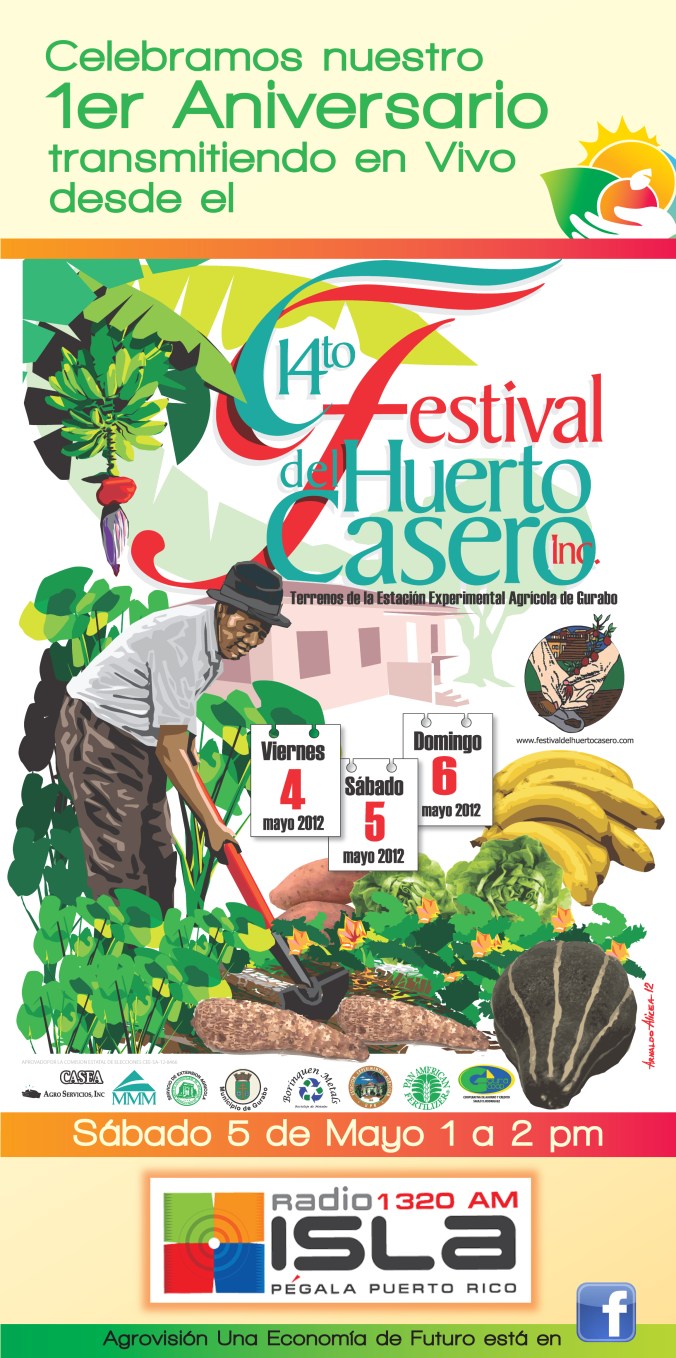
Foro: Amenaza a Nuestros Terrenos Agrícolas
Miércoles, 16 de mayo de 2012
9:00 am a 12:00m
Sede del Colegio de Agrónomos en Hato Rey
Entrada gratis

Foro: Amenaza a Nuestros Terrenos Agrícolas
Miércoles, 16 de mayo de 2012
9:00 am a 12:00m
Sede del Colegio de Agrónomos en Hato Rey
Entrada gratis

Via: Open-Site.org
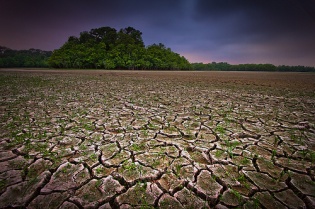
Can we solve global water scarcity?
This is a great article!
Op-Ed
After Recess: Change the World
By NICHOLAS D. KRISTOF
Published: February 4, 2012
A BATTLE between a class of fourth graders and a major movie studio would seem an unequal fight. Changing the world via internet petitions.

Damon Winter/The New York Times
Nicholas D. Kristof
On Reading Old Things is a great article by Jacquelyn Gill. All graduate students should read this article. At the beginning of this semester I assigned a reading by Gautier et al.(1980) and remember feeling a little embarrassed that the article, which is about satellite technology, was so old. Despite its age, however, the article is excellent and forms the basis of the satellite technology which we use to obtain the current hourly and daily solar radiation in the northern Caribbean. I could list other examples of old articles that are foundational and which should be read by anybody working in those fields. Gill mentions, and I have personally observed, that some journal reviewers sometime pressure authors to use recently published references and discourage older ones. Another practice that I have observed is that a journal will require that at least three references in the paper be from their journal. The reason for this of course is to jack up the rating of their journal, since they are rated on the number of times that their articles are cited. Anyhow, I highly recommend that you read On Reading Old Things.

From Gautier, C., G. R. Diak, and S. Masse, 1980: A simple physical model to estimate incident solar radiation at the surface from GOES satellite data. J. Appl. Meteor., 19, 1007–1012.
Puerto Rico divided over energy future
Island split over natural gas pipeline and windfarm in move away from oil-based energy generation

guardian.co.uk, Thursday 26 January 2012
Did you know that “…up to 75% of people living in developing countries rely on agriculture for their livelihoods and that over 90% of Africa’s agricultural production comes from small-scale production. Many of these farmers are women, who play a critical role in food and nutrition security and are responsible for growing, buying, selling and cooking the food. Between 60 and 80% of the food produced in most developing countries is produced by women and in sub-Saharan Africa, the figure is between 80 and 90 per cent. Yet less than 2% of land in sub-Saharan Africa is owned by women.”
“Across Africa, farmers are experiencing unpredictable growing seasons, making the age-old art and science of farming a guessing game. It is estimated that by 2050, up to 25% of world food production could be lost as a result of climate change, water scarcity and land degradation. This, combined with an expected population of 9 billion in 2050, paints a frightening picture of what may lie ahead for the next generation.”
Excerpt from GIMAC speaking notes for Mary Robinson President, Mary Robinson Foundation – Climate Justice (MRFCJ)
Ethical questions in an Internet Age
Ethical questions in online communities & thoughts on principles, based on the Baha’i writings, to consider.
 PRAGWATER