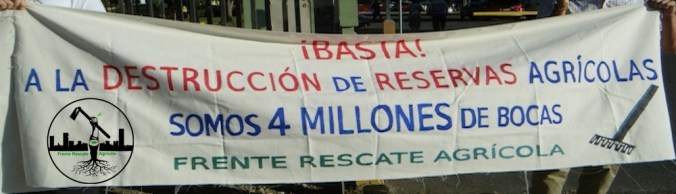
Rechazan Proceso Judicial Injusto

Rechazan Proceso Judicial Injusto

Las 6 personas arrestadas el 15 de diciembre de 2011, en la Reserva Agrícola de Santa Isabel, por defender la soberanía alimentaria de Puerto Rico, han decidido renunciar al proceso de Vista Preliminar (VP) por considerarlo un proceso que se ha llevado de una forma amañada y pro forma. La decisión tomada la expresarán en ……(leer más)

http://frapuertorico.wordpress.com/2012/08/10/rechazan-proceso-judicial-injusto/

A New Climate Science Resource from the National Academies

A New Climate Science Resource from the National Academies

The National Academies, the nation’s preeminent independent scientific advisory body, has released a series of videos building on themes laid out in its America’s Climate Choices reports over the past couple of years. Above, you can watch the material as a single long video. Below you can find links to seven themed sections:

Chapter 1: What is Climate?

Chapter 2: Is Earth Warming?

Chapter 3: Greenhouse Gases

Chapter 4: Increased Emissions

Chapter 5: How Much Warming?

Chapter 6: Solar Influence

Chapter 7: Natural Cycles

There’s plenty more on Dot Earth related to these reports. And of course there’s plenty here on the basic science pointing to a rising human influence on the climate system.

Todos a La Fortaleza: Manifestación para proteger y conservar la Estación Experimental Agrícola de Gurabo del RUM-UPR

Todos a La Fortaleza: Manifestación para proteger y conservar la Estación Experimental Agrícola de Gurabo del RUM-UPR

THE WORLD WITHOUT THE INTERNET

World without Internet
Via: OnlineEducation.net

Gobernador de Puerto Rico: Veto de la RCS 1053, NO AL TRASPASO DE TERRENOS AGRÍCOLAS.

Gobernador de Puerto Rico: Veto de la RCS 1053, NO AL TRASPASO DE TERRENOS AGRÍCOLAS.

SEGURIDAD ALIMENTARIA

SEGURIDAD ALIMENTARIA by Dra. Gladys M. González Martínez

This article by Dra. González (page 103) is excellent.  Although she speaks in general terms about food security, she provides a detailed analysis of the situation in Puerto Rico.  For years I have heard that we import around 85% of our food from outside the island, but I had never seen an official statement.  Dra. González provides it in this paper along with other critically important data about our agriculture and food security.


Download article (page 103)

“OCCUPY” THE OUTDATED PUBLISHING MODEL FOR SCIENTIFIC JOURNALS

The problem with publishing scientific articles with the traditional publishing companies is

1. Usually, the Federal government (e.g., NSF, NASA, NIH, etc.) pay for the research.
2. The University pays the salary of the researcher who writes the paper.
3. The researcher submits the paper to the publishing company and the Science Editor (usually a volunteer) finds reviewers (volunteers) to review the paper.
4. The Researcher pays the publishing company to publish his or her paper.
5. The University pays the publishing company for a subscription to access the journal article.
6. The taxpayers that paid for the research cannot access the journal article without paying for an expensive subscription.

Does something appear to be wrong with this picture?  Why do we need the publishing company??  Other than the production of hardcopy books, they really are not necessary.  And the Direct Publishing/Print on Demand movement has shown that it is possible to publish hard copy documents and make them available to a mass market.

The following links provide detailed information related to the problems with the old publishing model and ideas for moving toward more open access.
Boletín digital del Frente de Rescate Agrícola

Boletín digital del Frente de Rescate Agrícola

El Frente de Rescate Agrícola ha elaborado un Boletín Informativo para continuar la difusión masiva y educación ciudadana en relación a la seguridad alimentaria, la pérdida acelerada de terrenos agrícolas y los efectos adversos de la construcción e instalación del parque industrial de 44 molinos de viento en el municipio de Santa Isabel. Exhortamos a darle [mas]

MERCADO VERDE – MUJERES AGRICULTORAS EXHIBIRÁN SUS PRODUCTOS LOS ÚLTIMOS JUEVES DE CADA MES

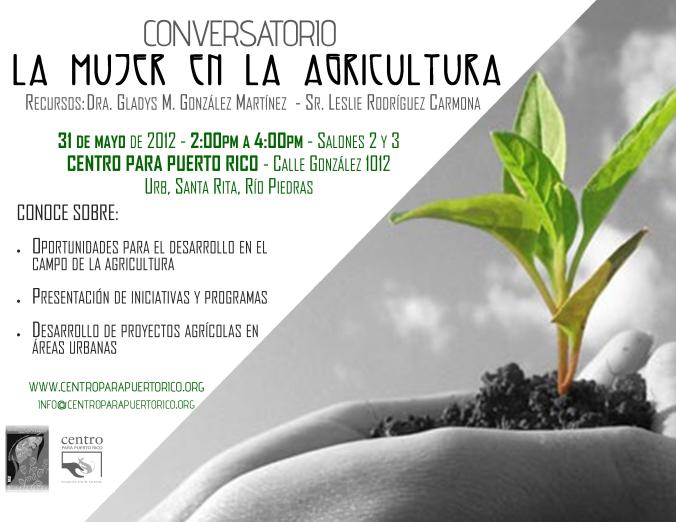
CONVERSATORIO: LA MUJER EN LA AGRICULTURA