GOES-PRWEB TO BECOME OPERATIONAL

Dear Friends

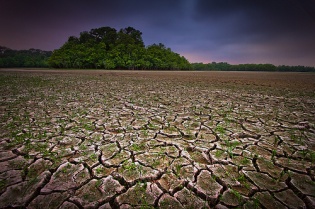
Total estimated actual evapotranspiration for 2010 derived from the GOES-PRWEB algorithm.

I am sending out this “heads up” to let you know that within the next few days the GOES-Puerto Rico Water and Energy Balance (PRWEB) model will become operational.   “Operational” means that the results will appear on the website everyday.  The water and energy balance results, and all other environmental parameters will be published in “near real-time” (i.e., through yesterday’s date).   In other words, if you visit the website on April 2, 2012, for example, the results will be current up through April 1, 2012.  In addition, graphic results will be provided on a daily basis starting from January 1, 2010.

As always, feel free to respond to my posts with questions or comments.

Eric
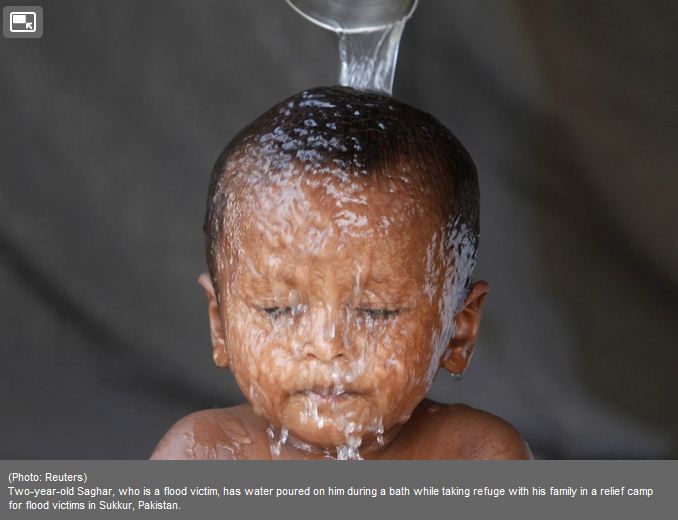
‘Water Crisis’ Looming, Hillary Clinton Warns

‘Water Crisis’ Looming, Hillary Clinton Warns

By JEREMY B. WHITE: March 22, 2012 International Business Times


Can we solve global water scarcity?

Can we solve global water scarcity?
This is a great article!

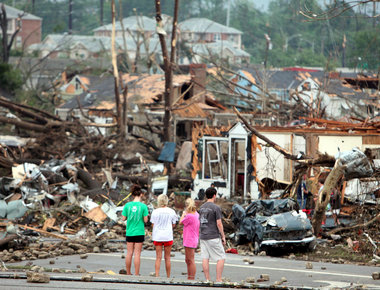
UPDATE: Tornadoes, Extreme Weather And Climate Change, Revisited

UPDATE: Tornadoes, Extreme Weather And Climate Change, Revisited

“Likely …. the most prolific five-day period of tornado activity on record for so early in the year”


Impacts of Land Cover/Land Use Changes in Coastal Tropical Regions under a Changing Environment in Northeast Puerto Rico

Coastal Urban Environmental Research Group (CUERG)
CUERG is a part of the NOAA-Cooperative Remote Sensing Science and Technology Center (NOAA-CREST) at the City College of New York.
CUERG has studied Impacts of Land Cover/Land Use Changes in Coastal Tropical Regions under a Changing Environment in northeast Puerto Rico
Research papers from the group can be found here.

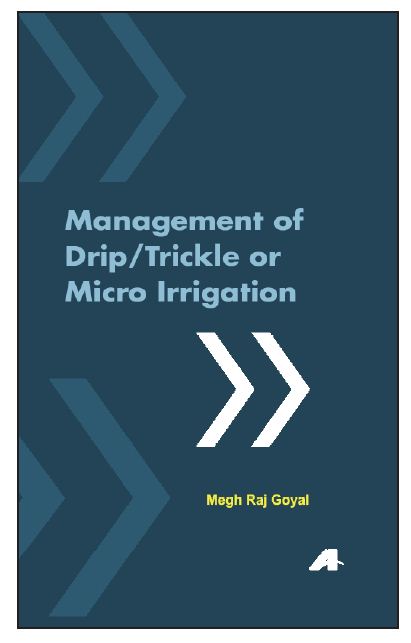
New Book Announcement: Management of Drip/Trickle or Micro Irrigation – Forthcoming Spring 2012

Management of Drip/Trickle or Micro Irrigation
By Megh R. Goyal, PhD, Professor in Agricultural and Biomedical Engineering, University of Puerto Rico

http://www.appleacademicpress.com

This important book—the only complete, one-stop manual on microirrigation worldwide—offers knowledge and techniques necessary to develop and manage a drip/trickle or micro irrigation system. The simplicity of the contents facilitates a technician to develop an effective micro irrigation system. Management of Drip/Trickle or Micro Irrigation includes the basic considerations relating to soil-water-plant interactions, with topics such as methods for soil moisture measurement; evapotranspiration; irrigation systems; tensiometer use and installation; principles of drip/ micro/trickle irrigation; filtration systems; automation; chloration; service and maintenance; design of drip irrigation and lateral lines; the evaluation of uniformity of application; and an economical analysis for selecting irrigation technology.

NASA: Human Activity, Not Solar Activity, Drives Global Warming and Returning to 350 ppm Is Needed to Stop It

NASA: Human Activity, Not Solar Activity, Drives Global Warming and Returning to 350 ppm Is Needed to Stop It

See also: http://www.giss.nasa.gov/research/briefs/hansen_16/

Giant Crack in Antarctica About to Spawn New York-Size Iceberg

Giant Crack in Antarctica About to Spawn New York-Size Iceberg

Explaining climate change science & rebutting global warming misinformation

Explaining climate change science & rebutting global warming misinformation

Do the arguments of the global warming skeptics hold water scientifically? The above website evaluates the validity of many of the common arguments made by global warming skeptics based on the scientific literature.

Did you know that between 60 and 80% of the food produced in most developing countries is produced by women

Did you know that “…up to 75% of people living in developing countries rely on agriculture for their livelihoods and that over 90% of Africa’s agricultural production comes from small-scale production. Many of these farmers are women, who play a critical role in food and nutrition security and are responsible for growing, buying, selling and cooking the food. Between 60 and 80% of the food produced in most developing countries is produced by women and in sub-Saharan Africa, the figure is between 80 and 90 per cent. Yet less than 2% of land in sub-Saharan Africa is owned by women.”

“Across Africa, farmers are experiencing unpredictable growing seasons, making the age-old art and science of farming a guessing game. It is estimated that by 2050, up to 25% of world food production could be lost as a result of climate change, water scarcity and land degradation. This, combined with an expected population of 9 billion in 2050, paints a frightening picture of what may lie ahead for the next generation.”
Excerpt from GIMAC speaking notes for Mary Robinson President, Mary Robinson Foundation – Climate Justice (MRFCJ)

The Mary Robinson Foundation – Climate Justice (MRFCJ)